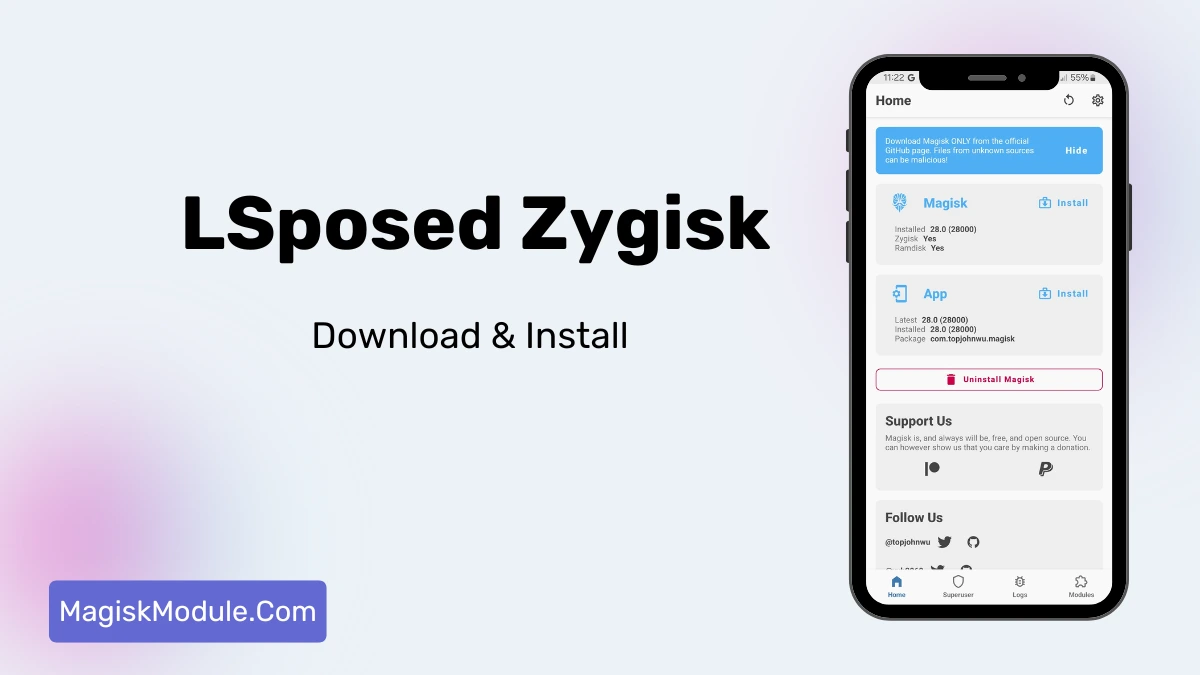
Module Overview
LSposed Zygisk is a modern systemless framework that allows users to run Xposed modules on rooted Android devices without altering core system partitions. It provides a dedicated management environment to control module injections safely.
I've been running this on my daily driver to keep lag and random crashes away while customizing my UI. Moving away from heavy core modifications to this systemless method makes testing multiple tweaks incredibly stable and much lighter on system resources.
-
Systemless module injection keeps your core Android partitions completely untouched and safe.
-
Target specific apps directly instead of forcing global tweaks across the entire operating system.
-
Run both Zygisk or older Riru environments depending on your current Magisk configuration.
-
Full backward compatibility ensures your favorite classic Xposed modules still function properly.
-
Far better stability compared to the random reboots common in older vanilla Xposed days.
-
A dedicated manager lets you toggle app-specific modules on or off with a quick tap.
How to Install (The Easy Way)
I always recommend the Zygisk method because it’s cleaner.
-
Make sure you have Magisk 24.0+ installed on your device.
-
Open your Magisk Manager.
-
Go to settings and enable Zygisk.
-
Reboot your phone.
-
Download the LSPosed Zygisk release zip file.
-
Open Magisk, go to "Modules," and flash the zip.
-
Reboot again.
That’s it. You’ll see the LSPosed notification in your status bar.
Install LSPosed Manager
-
Download the latest LSposed Manager APK
-
Enable Unknown Sources in device security settings
-
Install the downloaded APK
-
Open the LSposed Manager application
If you need deep customization without breaking your phone's performance, this framework is mandatory. It remains the safest and cleanest way to manage Xposed tweaks on modern Android firmware.
Rate this Module
Share your experience with the community.
* You will be prompted to login via Google in one click to verify your rating.